
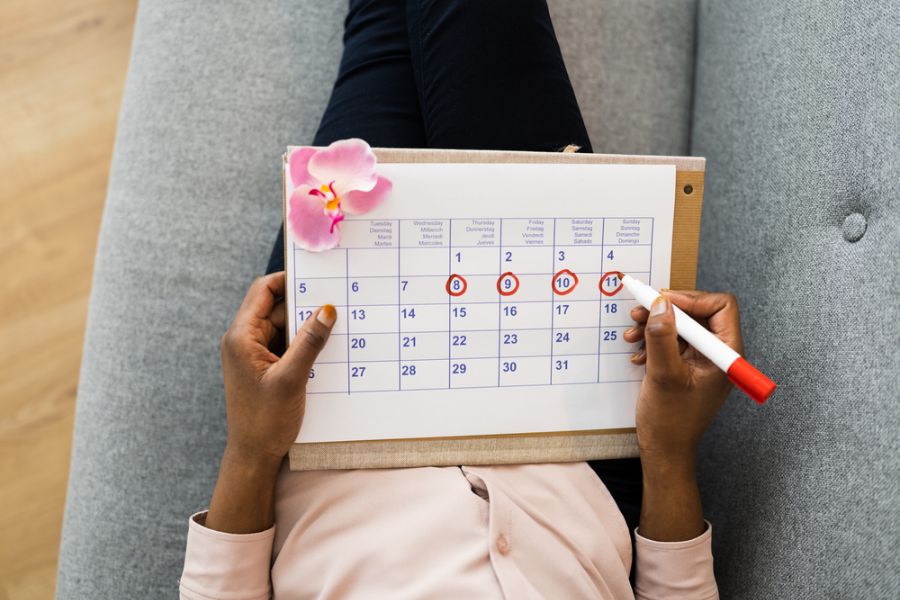
Do you know how long your luteal phase lasts? The luteal phase is the second part of your menstrual cycle. It begins on the day of ovulation (or the day after a positive OPK) and ends with either the start of your next period or the beginning of a pregnancy.
This phase is incredibly important because it’s when your body produces progesterone, the hormone that stabilizes and thickens your uterine lining. If your luteal phase is consistently shorter than about 11 days, it may be associated with lower progesterone levels in some women and could make conception or implantation more difficult. This is known as luteal phase deficiency or luteal phase defect (LPD).
So what can help? Here are some research-backed, fertility-supportive strategies that may support luteal phase function and progesterone levels:
Vitamin C Supplementation
Studies suggest that vitamin C supplementation may support hormone levels in women with luteal phase defects. In one study published in Fertility and Sterility, women who took 750 mg/day of vitamin C for three weeks saw significant improvements in progesterone levels. Over six months, 25% of these women conceived, compared to only 11% in the control group.
Healthy Vitamin D Levels
Vitamin D plays a crucial role in hormone regulation, and deficiency is widespread. Low vitamin D has been linked to reduced estrogen and progesterone levels, increasing the risk of a shortened luteal phase. Ensuring optimal levels (via sunlight, diet, or supplementation) may support healthier luteal function.
Adequate Folate Levels
Folate, the natural form of vitamin B9, plays an important role in hormone production and early pregnancy. Even mild folate insufficiency has been associated with reduced progesterone levels in the luteal phase. A high-quality prenatal with methylated folate can help support adequate folate levels.
Progesterone Cream
For some women over 40, natural progesterone production may not be sufficient despite healthy lifestyle habits and nutrient support. In these cases, a cream or vaginal suppositories may be helpful for supporting progesterone levels and the uterine lining in women for whom it is appropriate, under the guidance of a healthcare provider. It’s typically applied daily after ovulation until menstruation and often continued into early pregnancy when conception occurs.
Understanding your luteal phase is just one piece of the fertility puzzle, and there is so much more you can do to naturally support progesterone, improve cycle health, and prepare your body for conception in your 40s.
If you want step-by-step guidance, science-backed strategies, and a clear plan for supporting your fertility, my Fertile After 40 Masterclass is the perfect place to start.You’ll learn how to support your hormones, support egg quality, support your luteal phase, and prepare your body for conception.
You don’t have to guess. You can take meaningful steps, and I’ll show you how inside the Masterclass.
References:
PMID: 33827766, 34977455, 32068843, 31056309, 29762856, 28854586, 25681845
The information provided is for educational purposes only and is not intended as medical advice. Please work with your physician or qualified healthcare provider before making changes to your healthcare plan, particularly if you are pregnant, undergoing fertility treatment, taking medication, or managing a medical condition. This information is not intended to diagnose, treat, cure, or prevent any disease or medical condition.